

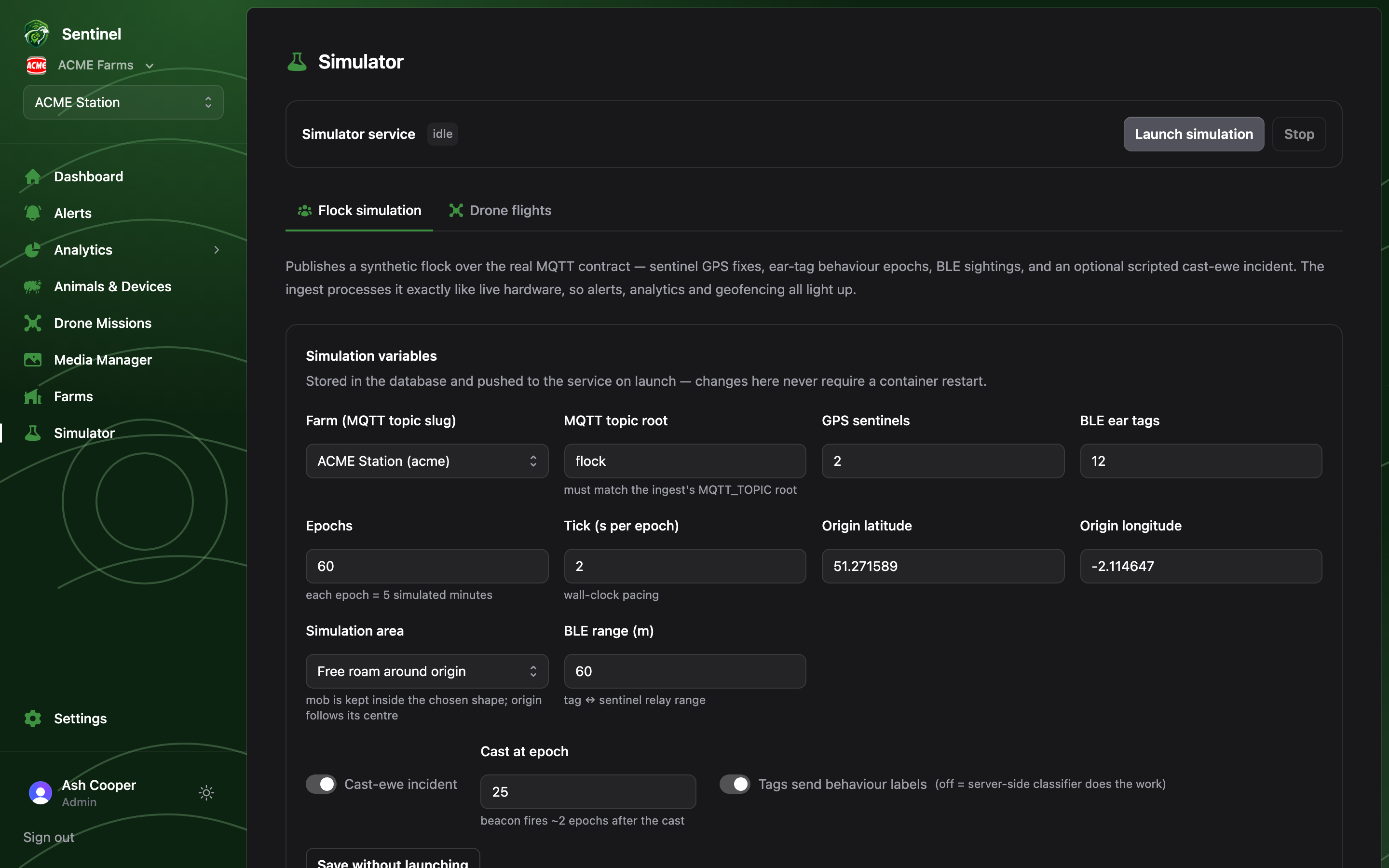
Service status
The status card shows the simulator service: running (with live epoch progress and message count), idle, error, or offline if its container isn’t up. Admins get Launch simulation and Stop buttons; changes reach the service within seconds — no restarts.Flock simulation variables
Everything about the synthetic mob is configurable and stored in the database:- Farm & topic — which farm slug the simulator publishes under, and the MQTT topic root (must match the ingest’s).
- Flock shape — number of GPS sentinels and BLE ear tags, epochs to run (each epoch is 5 simulated minutes), and the wall-clock tick per epoch.
- Where — an origin point, or pin the mob inside the farm boundary or a specific field, plus the BLE relay range.
- The incident — the Cast-ewe incident switch casts a ewe at a chosen epoch; her emergency beacon fires about two epochs later and travels the whole alert pipeline: dashboard, Alerts page, webhooks, drone response.
- Tags send behaviour labels — off means the server-side classifier does the work, exactly as with unlabelled hardware.